Wondering how laser hair removal works? Learn about the laser hair removal process, hair growth cycles, treatment sessions, preparation, recovery, and expected hair reduction.


How Does Laser Hair Removal Work? A Complete Overview
If you have ever wondered how laser hair removal works, the answer begins with light and pigment. Laser hair removal uses concentrated light energy that is absorbed by pigment within the hair. That energy becomes heat and affects the hair follicle, helping reduce future hair growth over a series of treatments.
The science itself may sound simple, but successful treatment requires careful consideration of hair color, skin tone, treatment area, growth cycle, device selection, and appropriate treatment settings.
What Is Laser Hair Removal?
Laser hair removal is a cosmetic treatment intended to reduce unwanted facial or body hair using laser energy.
It can be used on many areas, including the underarms, bikini area, legs, back, chest, neck, shoulders, and selected facial areas. The number of sessions needed and the degree of hair reduction vary from person to person.
Unlike shaving, which cuts hair at the skin surface, or waxing, which temporarily removes hair from the root, laser treatment focuses on the follicle that produces the hair.
How Laser Hair Removal Works
Understanding how laser hair removal works starts with melanin.
Melanin is the pigment that gives hair its color. During treatment, light from the laser is absorbed by this pigment. The absorbed light is converted into heat, and that heat affects structures within the hair follicle responsible for hair growth.
Over repeated sessions, successfully treated follicles may produce less hair, and remaining growth may become finer.
This is why the treatment is generally discussed as a process rather than an instant removal technique.
The Science of Laser Hair Removal
The science of laser hair removal depends on selective targeting.
The goal is to deliver enough energy to the pigmented hair while limiting unnecessary exposure to surrounding skin. Hair color, skin tone, wavelength, cooling method, energy settings, and provider technique all influence treatment planning.
Historically, laser hair removal worked most predictably when there was a strong contrast between darker hair and lighter skin. Advances in laser technology have expanded treatment options across a wider range of skin tones, but appropriate device selection and provider experience remain particularly important. The American Academy of Dermatology notes that people of all skin tones can be candidates when treatment is performed appropriately.
Why Hair Growth Cycles Matter
The laser hair removal mechanism is only part of the story.
Hair follicles move through different growth stages, and not every follicle is actively producing hair at the same time. Laser treatment is most useful when targetable hair is actively growing.
This means one appointment cannot usually address every hair in an area.
Additional treatments are scheduled over time so that more follicles can be targeted as they enter responsive growth phases. The AAD notes that six or more treatment sessions may be needed for many patients.
What Happens During the Laser Hair Removal Process?
The laser hair removal process begins before the device is switched on.
Your provider should first review your skin tone, hair characteristics, treatment area, medical history, medication use, tanning history, and relevant skin conditions.
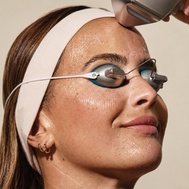
During treatment, protective eyewear is worn. The laser handpiece is moved across the selected area while controlled pulses of energy are delivered.
Sensation varies. Some people describe warmth or a brief snapping sensation as individual pulses are delivered.
Treatment time depends on the size of the area. A small facial area may take considerably less time than the legs or back.
Why Hair Color Makes a Difference
Because laser hair removal relies on pigment, hair containing more melanin is generally easier for the laser to target.
Very light blonde, gray, white, and some red hairs contain less targetable pigment, which may make response less predictable.
This does not mean every dark hair responds identically. Hair thickness, density, hormonal influences, treatment settings, and treatment area also affect outcomes.
Your provider should assess these factors before estimating what type of reduction may be realistic.
Can Laser Hair Removal Work on Darker Skin?
Modern technologies have made laser hair removal possible for a broader range of complexions.
However, melanin is also present in skin. This makes it important to select appropriate equipment and settings so that the treatment focuses on the hair while minimizing injury to surrounding skin.
AAD guidance specifically recommends choosing a clinician experienced in treating your skin tone. A personalized approach matters more than simply using the same treatment settings for every patient.
Is Laser Hair Removal Permanent?
The answer requires some nuance.
The AAD states that after an adequate series of treatments, hair removal can be long-lasting and may be permanent in many body areas, although hormonal influences can cause regrowth, particularly on a woman’s face. Maintenance treatments may sometimes be needed when hair returns.
For website and advertising language, it is generally more responsible to describe the service as long-term hair reduction rather than promise that every treated hair will disappear forever. Individual results vary.
How Do You Prepare for Laser Hair Removal?
Preparation should be based on the instructions given by your provider.
In general, the treatment area should not be recently tanned, and your provider should know about medications, skin conditions, previous reactions, and recent sun exposure.
Patients are often instructed to shave the area before treatment while avoiding methods such as waxing or plucking that remove the follicle target before the appointment.
Exact preparation can vary by technology and treatment area, so individualized instructions should take priority over generic online advice.
What Happens After Treatment?
Temporary redness, warmth, or mild swelling around treated follicles may occur.
Most patients can return to routine activities relatively quickly, although skin response varies. The AAD describes laser hair removal as generally having little to no downtime.
Sun protection is particularly important after treatment because recently treated skin may be more sensitive.
Hair does not necessarily disappear immediately. Some treated hairs gradually shed over the following period while other follicles continue through their normal growth cycles.
How Many Sessions Will You Need?
There is no universal treatment count.
The area being treated, hair density, hair color, skin tone, hormonal influences, previous hair-removal methods, and individual response all influence the number of sessions.
The AAD notes that six or more sessions are common.
Rather than promising a fixed number, a provider should evaluate response throughout the treatment series and adjust the plan when necessary.
Laser Hair Removal Explained for First Time Patients
When laser hair removal is explained simply, the process involves three ideas.
Light targets pigment within the hair. That light becomes heat and affects the follicle. Repeated sessions allow additional follicles to be treated as hair moves through different growth phases.
The technology may be straightforward, but individual treatment planning is what helps make the process appropriate for different skin and hair types.
Is Laser Hair Removal Right for You?
Laser hair removal may be worth considering if you want to reduce unwanted hair or decrease reliance on shaving, waxing, or other temporary methods.
Whether it is appropriate depends on the characteristics of your hair and skin as well as medical history, medications, treatment area, and recent sun exposure.
A consultation provides an opportunity to discuss those factors before beginning treatment.
Laser Hair Removal at Solaié Wellness
At Solaié Wellness in St. Charles, laser hair removal begins with an individual assessment of your hair, skin, treatment area, and personal preferences.
Your provider can explain the expected treatment process, recommended spacing between sessions, preparation, aftercare, and what degree of hair reduction may be realistic for you.
Book a Consultation
It’s easy and free!